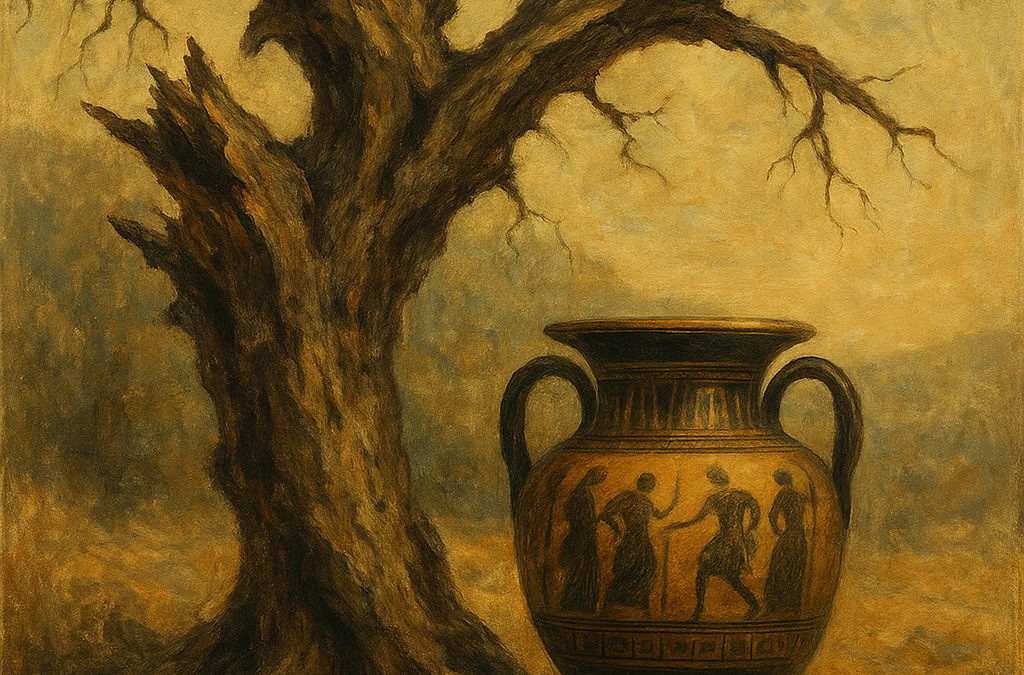
Kannada’s celebrated poet Bendre says in a poem that for a poet to hum a song, even a broken tamarind tree is enough.
John Keats, in his poem Ode on a Grecian Urn, sings beautifully of the paintings adorning an ancient urn. These images depict the rustic and pastoral life of ancient Greece. Yet, what does an urn truly carry? The ashes of the dead. That is the truth. The poem concludes with the immortal line: “Beauty is truth, truth beauty”. This aligns with Vedanta’s “Satyam Shivam Sundaram”. Keats equates beauty and truth; to speak of beauty is to speak of truth, and to speak of truth is to speak of beauty. They are not to be sought separately.
Both Bendre and Keats show us that a writer need not search far and wide for a subject; every fragment, every atom of this world offers itself as a subject for art.